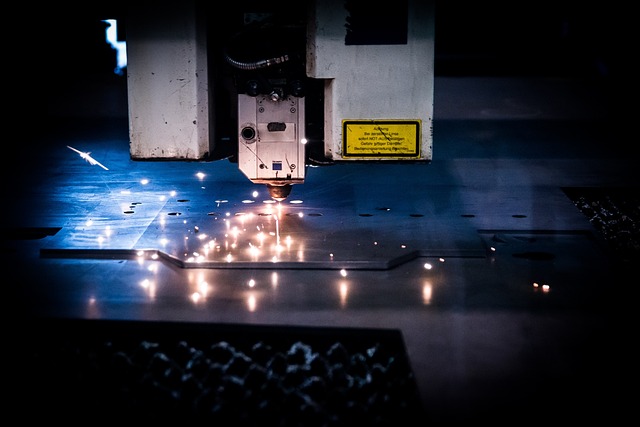
CNC Laser Cutting: Precision Manufacturing for Modern Engineering

In today’s fast-paced manufacturing landscape, precision, repeatability, and speed are no longer optional—they’re essential. CNC laser cutting has emerged as one of the most powerful and versatile fabrication technologies, enabling engineers and manufacturers to transform digital designs into highly accurate physical parts with minimal waste and exceptional consistency.
At Forgenest Systems, CNC laser cutting plays a critical role in bridging advanced design with real-world production. This article explores how CNC laser cutting works, its advantages, applications, and why it continues to redefine modern manufacturing.
What Is CNC Laser Cutting?
CNC (Computer Numerical Control) laser cutting is a non-contact manufacturing process that uses a highly focused laser beam to cut, engrave, or mark materials with extreme precision. The cutting path is controlled by computer-generated design files (CAD/CAM), ensuring repeatability and accuracy down to fractions of a millimeter.
The laser generates intense heat at the focal point, melting, burning, or vaporizing material while an assist gas (such as oxygen or nitrogen) clears away molten debris. Because the tool never physically touches the material, CNC laser cutting minimizes mechanical stress and distortion.
How the Process Works
- Design Creation
Engineers create a digital model using CAD software. This design defines geometry, tolerances, and cutting paths. - Programming the CNC System
The design is converted into machine-readable instructions that guide the laser’s movement, speed, and power. - Material Setup
The raw material—metal, plastic, composite, or other substrates—is secured on the laser cutting bed. - Laser Cutting Execution
The laser follows the programmed path, producing clean, accurate cuts with minimal kerf width. - Finishing (If Required)
Many parts require little to no post-processing, though deburring or surface finishing can be applied when needed.
Key Advantages of CNC Laser Cutting
1. Exceptional Precision and Accuracy
Laser cutting achieves tight tolerances and sharp edges, making it ideal for intricate geometries and fine details that are difficult or impossible with traditional machining.
2. High Repeatability
Once a design is programmed, identical parts can be produced repeatedly with consistent quality—critical for prototyping and production runs alike.
3. Minimal Material Waste
The narrow laser kerf and optimized nesting reduce scrap material, improving efficiency and lowering production costs.
4. Non-Contact Process
Because there is no physical cutting tool, there’s less wear, reduced contamination, and minimal risk of material deformation.
5. Fast Turnaround
CNC laser cutting significantly shortens lead times, making it well-suited for rapid prototyping and agile product development cycles.
Materials Commonly Used in CNC Laser Cutting
CNC laser systems are compatible with a wide range of materials, including:
- Metals: Stainless steel, aluminum, mild steel, brass, copper
- Plastics: Acrylic, polycarbonate, ABS (material-dependent)
- Composites and Laminates
- Thin Ceramics and Specialty Materials
Selecting the correct laser type—CO₂, fiber, or diode—is essential to achieving optimal results for each material.
Applications Across Industries
CNC laser cutting is widely adopted across multiple sectors due to its flexibility and precision:
Electronics & Hardware Engineering
- Enclosures and chassis
- Heat sinks and shielding
- Precision brackets and mounts
Industrial & Automation Systems
- Custom machine components
- Panels and control housings
- Structural and functional parts
Aerospace & Defense
- Lightweight, high-tolerance components
- Prototyping for advanced systems
- Precision-cut metal assemblies
Medical & Scientific Equipment
- Instrument housings
- Fine mechanical parts
- Custom research components
CNC Laser Cutting vs. Traditional Cutting Methods
Compared to mechanical cutting, waterjet, or plasma cutting, CNC laser cutting offers superior precision, cleaner edges, and faster setup times—especially for thin to medium-thickness materials. While plasma cutting excels in very thick metals and waterjet avoids thermal effects, laser cutting often provides the best balance of accuracy, speed, and cost for high-precision applications.
Design Considerations for Laser Cutting
To maximize performance and manufacturability, engineers should consider:
- Material thickness and reflectivity
- Minimum feature sizes and hole diameters
- Heat-sensitive zones and tolerances
- Edge quality and surface finish requirements
Early collaboration between design and manufacturing teams ensures optimal outcomes and avoids costly revisions.
Why CNC Laser Cutting Matters for Product Development
In modern hardware and laser system development, CNC laser cutting enables faster iteration, tighter integration between design and production, and smoother transitions from prototype to manufacturing. It empowers engineers to test ideas quickly, refine designs efficiently, and scale production with confidence.
At Forgenest Systems, CNC laser cutting is more than a fabrication step—it’s a strategic tool that supports innovation, reliability, and production readiness.
Final Thoughts
CNC laser cutting continues to shape the future of precision manufacturing. Its combination of accuracy, flexibility, and efficiency makes it an indispensable technology for companies developing advanced hardware and laser-based systems.
Whether you’re prototyping a new concept or scaling a production-ready design, CNC laser cutting offers the precision and reliability needed to turn complex ideas into real-world solutions.